10 Facts About the Milky Way
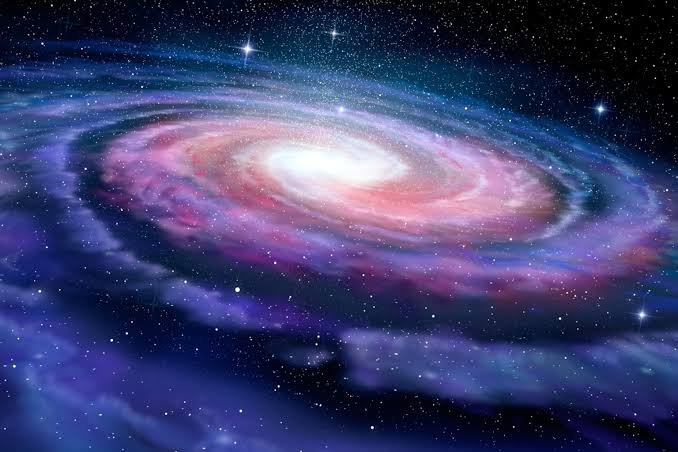
- Galaxy Type: The Milky Way is a barred spiral galaxy featuring a bright central bar-shaped structure surrounded by a disk of gas, dust, and stars.
- Age: It is approximately 13.6 billion years old, making it nearly as old as the universe itself (13.8 billion years).
- Size: The galactic disk spans roughly 100,000 to 105,000 light-years across, but is only about 1,000 light-years thick.
- Star Count: Astronomers estimate the galaxy contains between 100 billion and 400 billion stars.
- Solar System Location: Our Sun sits about 26,000 to 27,000 light-years away from the galactic center, located on a smaller spiral structure known as the Orion Arm (or Orion Spur).
- Galactic Orbit: It takes our solar system roughly 230 million to 250 million years to complete a single orbit around the center of the galaxy.
- Supermassive Black Hole: At the galaxy’s heart sits Sagittarius A*, a supermassive black hole with a mass of about 4 million suns.
- Dark Matter Dominance: Visible stars and gas make up only a tiny fraction of the galaxy; roughly 90% to 95% of its total mass consists of invisible dark matter.
- Cannibalistic History: Over billions of years, the Milky Way has grown by consuming smaller neighboring systems, absorbing at least six smaller galaxies.
- Future Collision: The Milky Way is on a collision course with the nearby Andromeda galaxy, and the two are predicted to merge in about 4 billion years.
10 Facts About the Andromeda Galaxy
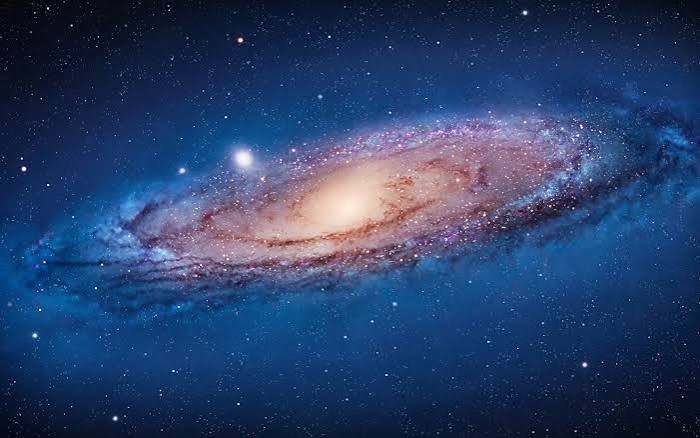
- Closest Major Galaxy: It is the closest large, full-sized galaxy to our own Milky Way, though several smaller irregular dwarf galaxies are closer.
- Naked-Eye Visibility: Under a clear, dark night sky away from bright city lights, Andromeda is the most distant object you can see with the unaided human eye.
- Largest in the Local Group: It is the biggest galaxy in our Local Group collection, spanning roughly 220,000 light-years across—making it significantly wider than the Milky Way.
- Trillion-Star Population: It contains an estimated 1 trillion stars, more than double the Milky Way’s stellar population.
- Double Nucleus: At its center, Andromeda has a crowded, unusual double nucleus made of a dense cluster of stars orbiting a central supermassive black hole. [2, 4]
- Head-on Collision Course: Andromeda and the Milky Way are speeding toward each other at roughly 110 to 140 kilometers per second and are projected to merge in about 4 to 4.5 billion years. [5, 6, 7]
- First Historic Identification: Persian astronomer Abd al-Rahman al-Sufi first recorded it in writing around 964 CE in his Book of Fixed Stars, describing it as a “small cloud”.
- Proved Galaxies Exist Beyond Us: In the 1920s, astronomer Edwin Hubble used Cepheid variable stars inside Andromeda to prove it was an independent “island universe” far outside the Milky Way.
- Dwarf Satellite Galaxies: It is orbited by at least 14 to 20 smaller dwarf companion galaxies, with the brightest and most famous being M32 and M110.
- Abundant Globular Clusters: Over 450 dense globular clusters orbit within and around the halo of the Andromeda Galaxy, some of which are among the most densely packed star groups known in the universe.
10 Facts About the Messier 100 Galaxy
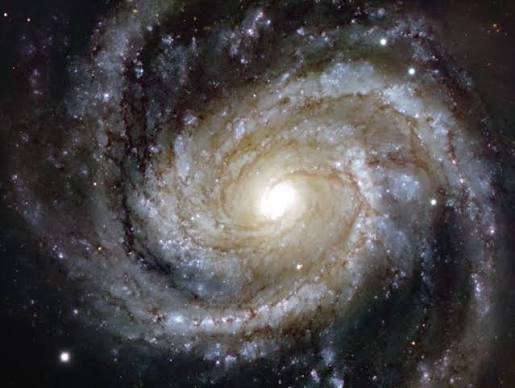
Messier 100 (also known as NGC 4321) is a grand-design intermediate spiral galaxy located roughly 55 million light-years from Earth.
- Discovery: Discovered by astronomer Pierre Méchain on March 15, 1781, and added to Charles Messier‘s famous catalog a month later.
- Classification: Classified as a “grand-design” spiral galaxy because of its exceptionally prominent, well-defined, and sweeping spiral arms.
- Location: Situated in the northern part of the constellation Coma Berenices as a member of the massive Virgo Cluster of galaxies.
- Size: Measures about 160,000 to 166,000 light-years across, making it larger than our Milky Way.
- Stellar Population: Estimated to contain around 400 billion stars spread across its core and sprawling disk.
- Starburst Core: Features an active central starburst ring (about 1 kiloparsec in radius) where rapid star formation has persisted for at least 500 million years.
- Satellite Companions: Accompanied by smaller neighboring galaxies like NGC 4323 (which is connected to it by a bridge of luminous gas and dust) and NGC 4328.
- Supernovae Hotspot: Has hosted several recorded supernovae discoveries over the 20th and 21st centuries, which astronomers use to measure cosmic distances.
- Face-On View: Oriented almost entirely face-on relative to Earth, offering a clear view of its bright blue stellar clusters and dark dust lanes.
- Hubble Significance: Frequently targeted by the Hubble Space Telescope; famous early images of M100 helped verify and showcase the success of the telescope’s optics correction in 1993.